Jackery Explorer 300 Review: Is This Portable Power Station Worth It for Camping? If you spend weekends camping off-grid, running a mobile photography setup, or powering essential devices during long wilderness trips, having reliable portable power is non-negotiable. The Jackery Explorer 300 has long been a favorite among outdoor enthusiasts, but with upgraded LiFePO4 battery chemistry and ultra-fast charging capabilities, does it still hold the crown for mid-tier portable power stations? In this hands-on review, we break down the specs, real-world performance, pros and cons, and whether this power station belongs in your camping setup. 👉 Check Current Price & Deals for Jackery Explorer 300 on Amazon Quick Verdict: Who Is The Jackery Explorer 300 For? Best For: Campers, drone pilots, tailgaters, CPAP users needing weekend battery backup, and hikers needing lightweight off-grid power. Not For: Heavy appliance operation (refrigerators, high-wattag...
The Hidden World Beneath the Forest: Discover the Secret Life of Soil
When people explore a forest, they usually look at the towering trees, beautiful landscapes, birds, and wildlife. But one of the most fascinating ecosystems is located directly beneath their feet. Under every forest trail lies a complex world filled with fungi, insects, microorganisms, roots, and countless living organisms working together.
Forest soil is far more than ordinary dirt. It is a living ecosystem that stores water, recycles nutrients, supports plant growth, and helps maintain the balance of nature. Some of its most important inhabitants are so small that they cannot be seen without a microscope, while others create enormous underground networks that connect different parts of the forest.
Understanding what happens beneath the forest floor can completely change the way you experience hiking and camping. The ground beneath your boots is not an empty surface. It is one of the busiest and most important environments in the natural world.

1. Forest Soil Is a Living Ecosystem
Unlike the simple surface many people imagine, forest soil contains an enormous variety of organisms. Bacteria, fungi, earthworms, insects, mites, and microscopic animals all contribute to the processes that keep forests functioning.
These organisms perform different jobs. Some break down fallen leaves, others help release nutrients, and some improve the structure of the soil. Together, they create an environment where trees and other plants can grow.
What Lives Beneath the Forest Floor?
- Bacteria: Microscopic organisms involved in decomposition and nutrient cycling.
- Fungi: Organisms that break down organic material and form relationships with plant roots.
- Earthworms: Animals that mix organic matter into the soil and create channels that improve its structure.
- Springtails: Tiny soil animals that feed on fungi and decomposing organic material.
- Insect larvae: Many insects spend part of their life cycle beneath leaves, logs, or inside the soil.
Each organism contributes to a larger system. Even creatures that seem unimportant can play a valuable role in maintaining a healthy forest.
2. The Incredible Role of Fungi in Forests
Fungi are among the most important organisms in forest ecosystems. They help decompose dead organic material and return nutrients to the environment. Without decomposers, fallen leaves, dead branches, and other organic remains would accumulate much more slowly.
Some fungi also form special partnerships with plant roots. These relationships are known as mycorrhizae.
What Are Mycorrhizal Networks?
Mycorrhizal fungi grow around or inside plant roots, depending on the type of association. Their fine fungal threads, called hyphae, can extend into surrounding soil and explore areas that roots alone may not reach easily.
In many of these partnerships, fungi help plants absorb water and minerals, especially phosphorus. In return, plants provide the fungi with sugars and other carbon compounds produced through photosynthesis.
Scientists have also investigated how resources and chemical signals may move through connected fungal and root systems. However, popular descriptions of forests as trees deliberately talking to each other through a single underground internet can oversimplify a complicated scientific subject.

3. Why Fallen Leaves Are Essential for Forest Health
During autumn, forests can become covered in colorful layers of fallen leaves. Although these leaves may look like waste, they are an important part of the forest's natural recycling system.
As leaves decompose, microorganisms and small soil animals gradually break them down. Their nutrients become part of the soil and can eventually be used by growing plants.
The Natural Recycling Process
- Leaves, branches, and other organic materials fall onto the forest floor.
- Fungi and bacteria begin breaking down the organic matter.
- Small animals feed on fragments of decomposing material and microorganisms.
- The material gradually becomes part of the soil's organic matter.
- Nutrients are released and recycled through the ecosystem.
This process is essential because forests continuously use and recycle nutrients. What looks like the end of a leaf's life is actually the beginning of another stage in the forest ecosystem.

4. Earthworms: The Underground Engineers
Earthworms may not be the most attractive creatures in the forest, but they are extremely useful in many soil ecosystems. As they move through the ground, they create tunnels that can improve soil aeration and allow water to move through the soil.
Many earthworms also consume organic material and soil particles. Their digestive processes help transform this material into nutrient-rich casts that contribute to soil structure and fertility.
How Earthworms Improve Soil
- They create tunnels that can help air enter the soil.
- Their movement can improve water infiltration in suitable soils.
- They mix organic matter with mineral soil.
- Their casts contribute to soil structure and nutrient availability.
- They provide food for birds, amphibians, and other animals.
Earthworm activity varies according to climate, soil conditions, and species. Some forests naturally have very few earthworms, and introduced earthworms can even damage certain forest ecosystems by changing the way leaf litter is processed.
5. How Forest Soil Stores and Filters Water
One of the most important functions of forest soil is its ability to absorb and store water. Rain does not simply disappear when it reaches the ground. Some water flows over the surface, while some enters the soil and moves through its different layers.
Organic matter, roots, soil particles, and underground spaces all influence how water moves. Healthy soil can often absorb rainfall more effectively than heavily compacted ground, although the result depends on soil type, slope, vegetation, and weather conditions.
Why This Matters for Rivers and Streams
Water that enters forest soil may gradually move toward underground water reserves, springs, streams, and rivers. Soil can also retain certain particles and substances as water moves through it.
This makes forests important parts of many watersheds. Protecting forest soil helps maintain natural water processes and can reduce erosion in suitable landscapes.
6. The Different Layers of the Forest Floor
Forest soil is not identical from top to bottom. It often contains several layers, each with different materials and ecological functions.
The Organic Layer
The uppermost layer contains fresh leaves, needles, small branches, and other recently fallen material. This is where much of the early decomposition process begins.
The Humus Layer
Below the fresh litter, partially and well-decomposed organic material may accumulate. This darker material contributes to soil structure and provides resources for microorganisms and plants.
The Mineral Soil
Deeper down, mineral particles such as sand, silt, and clay become more prominent. Roots can extend into this layer to access water and nutrients.
Not every forest has exactly the same soil layers. Their appearance and thickness depend on climate, vegetation, geology, and the history of the landscape.
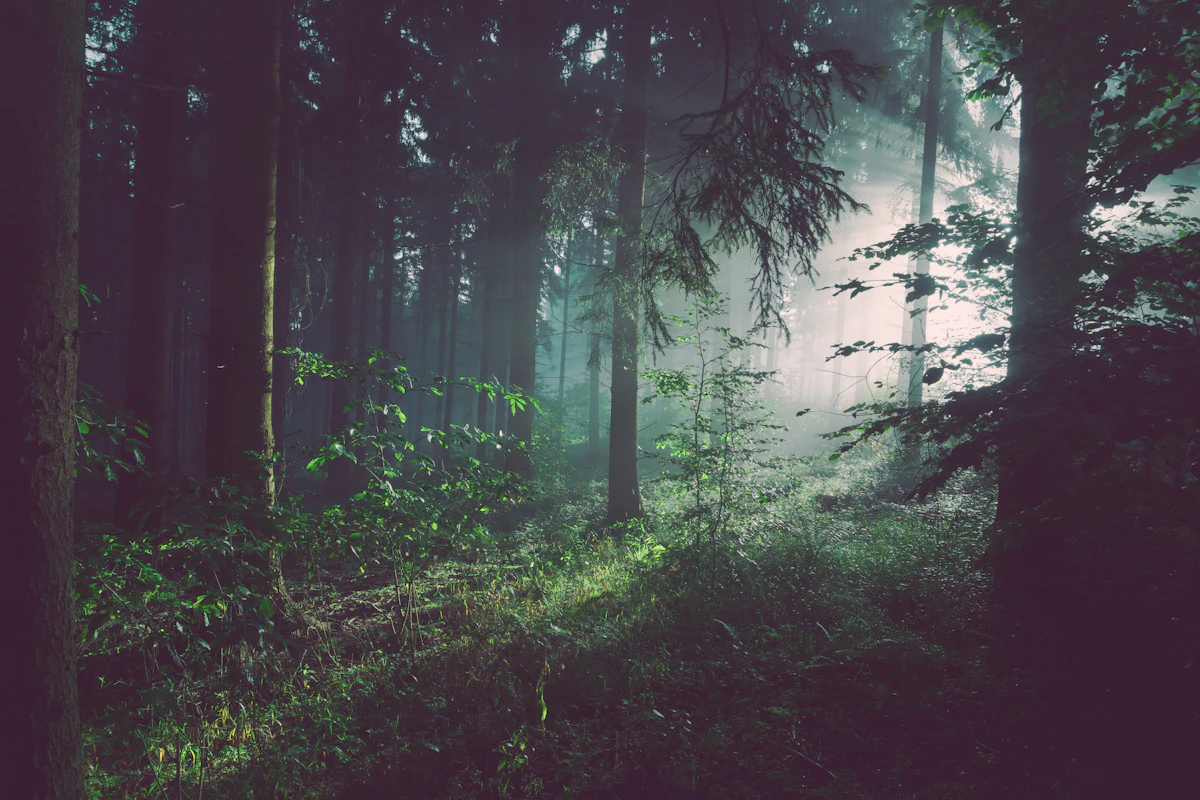
7. What Happens When Humans Damage Forest Soil?
Forest soil can appear strong, but it is surprisingly vulnerable to repeated disturbance. Heavy footsteps, vehicles, construction, and poorly managed camping areas can change its structure.
One common problem is soil compaction. When soil is compressed, the spaces between particles become smaller. This can make it harder for air and water to move through the ground and may limit root growth.
Common Causes of Soil Damage
- Walking outside established trails: Repeated traffic can damage vegetation and compact the soil.
- Driving vehicles through natural areas: Heavy vehicles can cause severe compaction and erosion.
- Removing dead wood: Fallen logs provide habitat and nutrients for many organisms.
- Improper waste disposal: Waste can introduce pollutants and disturb local ecosystems.
- Uncontrolled campfires: High temperatures can damage organic matter and soil organisms.
Responsible outdoor recreation helps reduce these impacts. Staying on established trails, using designated campsites, and following local fire regulations are simple ways to protect the environment.
8. How to Protect the Hidden Ecosystem During Hiking and Camping
You do not need specialized equipment to protect forest soil. Small decisions during an outdoor trip can make a meaningful difference when practiced by many visitors.
- Walk on marked trails whenever possible.
- Use established campsites instead of creating new camping areas.
- Leave fallen branches, leaves, and mushrooms where they naturally grow unless park rules say otherwise.
- Avoid digging unnecessarily into the forest floor.
- Pack out all trash and food waste.
- Use designated fire rings and follow seasonal fire restrictions.
- Respect protected habitats and local conservation rules.
Even a short hiking trip can become an opportunity to learn about the natural world. Looking closely at the ground, observing mushrooms, and noticing how leaves decompose can reveal an ecosystem that many visitors overlook.
Conclusion: The Forest's Greatest Secrets Are Beneath Your Feet
The forest floor is one of nature's most remarkable environments. Beneath fallen leaves and layers of soil, countless organisms work together to recycle nutrients, support plant growth, regulate water movement, and maintain ecological balance.
Fungi connect with roots, earthworms reshape the soil, microorganisms decompose organic matter, and fallen leaves become part of the next generation of forest growth. These processes happen continuously, often without being noticed by the people walking above them.
The next time you go hiking or camping, take a moment to appreciate the ground beneath your feet. A healthy forest is not only made of trees and wildlife. It also depends on the extraordinary living world hidden underground.
Frequently Asked Questions (FAQ)
Is forest soil alive?
Yes. Forest soil contains bacteria, fungi, insects, earthworms, and many other living organisms. Their activities help maintain soil structure and recycle nutrients.
Why are fungi important in forests?
Fungi help decompose organic material and form partnerships with plant roots. Some mycorrhizal fungi help plants obtain water and minerals from the soil.
What is humus in forest soil?
Humus is a dark, relatively stable form of decomposed organic matter that contributes to soil structure and nutrient storage.
Do fallen leaves help trees grow?
Yes. As fallen leaves decompose, nutrients are gradually recycled into the soil, where they can become available to plants and other organisms.
Can hiking damage forest soil?
Repeated foot traffic, especially outside established trails, can compact soil and damage vegetation. Staying on marked paths helps reduce these impacts.
What is the relationship between trees and mycorrhizal fungi?
Mycorrhizal fungi form partnerships with plant roots. Fungi can help plants absorb water and minerals, while plants provide the fungi with carbon compounds produced through photosynthesis.
Comments
Post a Comment